
Embryo Transfer

Recipient Mare Options to Fit Your Breeding Program

What is Embryo Transfer?
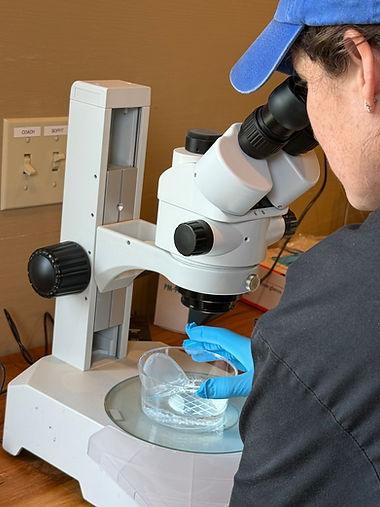
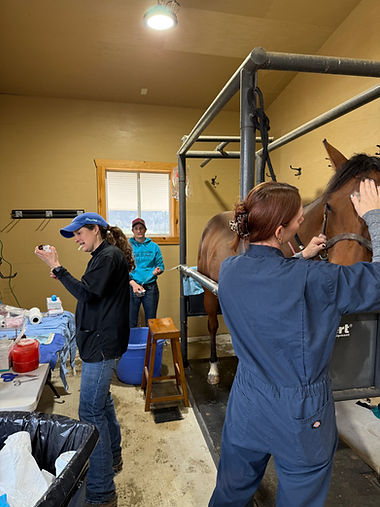


Embryo Transfer Performed by a licensed equine veterinarian
At Racing City Recipient Mares, we specialize in providing a carefully selected, healthy, and well-managed herd of recipient (surrogate) mares for embryo transfer. All embryo transfer procedures are performed by an equine veterinarian.
How It Works:
-
Dr. O'Brien will oversee and perform the embryo collection (flush) from your donor mare, as well as the embryo transfer into the recipient mare.
-
Racing City Recipient Mares provides the recipient mare and handles her care, management, and synchronization with your donor mare’s cycle for optimal timing and success.
This division of responsibilities ensures that your mare receives expert reproductive care while also gaining access to a reliable and experienced surrogate.
For breeders looking to produce a foal using a recipient mare, Racing City Recipient Mares offers flexible options to accommodate your specific needs.
Once an embryo is recovered, you have two primary options for transfer:
-
Use a Racing City Recipient Mare
We maintain a boutique herd of recipient mares that have been carefully screened for health, temperament, and reproductive soundness. These mares are professionally managed and synchronized to be ready when your donor mare ovulates. This is the most reliable option, especially when only one embryo is expected or when timing is tight. -
Use Your Own Recipient Mare
If you have your own recipient mare and the timing aligns properly, we can transfer the embryo into your mare. Please note that this option requires precise synchronization between the donor and recipient cycles, and typically works best when multiple recipient mares are available to increase the chances of success.
Whether you choose one of our proven recipient mares or wish to use your own, we’re here to support your breeding goals every step of the way.
Contact us to learn more about what option is right for you.
Embryo Transfer
Embryo transfer is a reproductive technique in which an embryo is collected from a donor mare about seven days after fertilization and then placed into a recipient mare. The recipient mare assumes the pregnancy, carrying the foal to term and giving birth, while the donor mare remains open and available for continued breeding or competition.
The Embryo Transfer Process: What to Expect
Throughout the breeding process, mares are closely monitored to determine their precise ovulation dates.
It is then transferred through the cervix into the uterus of a prepared recipient mare. Pregnancy checks are typically performed four and seven days after transfer, which corresponds to days 11 and 14 post-ovulation.
Success rates in embryo transfer are based on two key factors: the ability to recover an embryo from the donor mare and the successful establishment of pregnancy in the recipient mare. The recovery rate can vary depending on the donor mare’s fertility and other factors.
Embryo Flushing
Around seven days post-ovulation, the donor mare undergoes a uterine flush using a specialized electrolyte- and nutrient-rich solution. This solution, introduced via a catheter, is then filtered to isolate the embryo, which typically measures between 300 and 500 microns (0.3–0.5mm) in diameter. The embryo is carefully examined under a microscope to assess its viability.
Once retrieved, the embryo is thoroughly washed to eliminate any contaminants and placed in a nutrient-rich medium. The donor mare is given a prostaglandin injection to bring her back into estrus, reducing the risk of infection. The procedure is quick and typically completed within an hour, often requiring only mild sedation.
Since the procedure occurs early in gestation, there is no way to confirm pregnancy before flushing. The presence of an embryo can only be determined once the fluid is examined. If an embryo is retrieved, it can then be transferred to a recipient mare.
The Embryo Transfer Process
Before the transfer, the recipient mare is carefully evaluated for suitability. Key factors include:
-
The presence of a normal corpus luteum
-
Good uterine tone
-
Absence of edema
If multiple recipient mares meet the criteria, the best candidate is selected and prepared for transfer. Approximately 5 to 10 minutes before the procedure, the recipient mare is sedated and given a non-steroidal anti-inflammatory drug (NSAID) to prevent prostaglandin production, which could negatively impact the corpus luteum and progesterone levels.
The transfer takes place in our secure environment to ensure the best chance of success. The mare’s tail is tied up, and both the vulva and vestibule are thoroughly cleaned to maintain a sterile procedure.
Why Consider Embryo Transfer?
Embryo transfer is an excellent reproductive solution for mares in competition, older mares, or those unable to carry a pregnancy to term.
Benefits of Embryo Transfer:
-
Competition Mares: Mares can continue their careers without the downtime required for late pregnancy, foaling, and nursing.
-
Increased Offspring Potential: A mare can produce multiple foals in a single season rather than being limited to one per year.
-
Genetic Value: This technique maximizes breeding opportunities for mares with desirable bloodlines.
-
Health Concerns: Mares with reproductive challenges, significant health or orthopedic issues preventing them from carrying a foal may still pass on their genetics through embryo transfer without the strain of carrying a pregnancy.
-
Risk to Mare: The donor mare is not subjected to the physical risks of pregnancy and foaling.
-
Age of Mare: Older mares can still pass on their genetics by having embryos carried by younger, healthier recipient mares.